
Ask ten people why they get into an ice bath.
You will hear ten different answers.
Which one is yours?
- Before the day startsA few quiet minutes before the house wakes up.
- After a hard sessionStraight from the run, the surf or the gym.
- Hot and coldBetween rounds in the sauna, often with friends.
- A pauseFive minutes away from the screen.
- The challengeA degree colder than last month, in your own time.
- The ritualThe same place, the same time, most days.
Some people can’t explain it. They just keep coming back.
That part is personal. No study can measure it for you.
Studies can still show what tends to happen.
In 2025, a team at the University of South Australia did just that. They looked at 11 studies of cold water. Together, the studies had 3,177 healthy adults. You can read their review in PLOS ONE.
Here is what they found, step by step.
The journey, step by step
01 · Getting in
The first minute
The first minute is the one everyone remembers.
The cold takes your breath away. You gasp. You breathe fast. This is called cold shock.
The researchers say your body treats the cold as a challenge. They compare it to a hard workout.
So yes, it feels hard. For some people, that is the point. For a few minutes, your phone can’t reach you. Your to-do list can’t either.
The gasp is also why one rule never changes: never get in alone.
02 · Stepping out
Twelve hours later
You get out. You dry off. Your day carries on.
The researchers checked people’s stress at different times. The clear change came half a day later.
Twelve hours after the cold, stress was lower.
Get in at 7 in the morning. Twelve hours later, it is 7 in the evening.
03 · Winding down
That night
Sleep was better too. In the studies, men got into cold water after exercise. They slept better. The researchers want the same studies with women.
Some people use the ice bath to wind down in the evening. Some like the morning. Others go straight after training.
There is no single right time. Only the one that fits your day.
04 · Making it a habit
The weeks after
Keep going for a few weeks. It becomes a habit. That is where the next results come from.
Some people took short cold showers. They rated their life as a little better for a while.
In one study, people had cold showers often. They took 29% fewer days off sick.
Both results come from cold showers. The sick days come from just one study. So they are early signs, not the final word.
05 · Why you get in
Your reason
This is the part the research leaves to you.
The researchers say it is too early to know who gains most. It is too early to know the ideal way to do it, too.
It depends on who gets in. It depends on when, and how.
A team in the UK said the same in 2017. Mike Tipton led it, at the University of Portsmouth. They said what cold water does depends on the situation. Most claims about cold water had a sensible reason behind them, they found.
Studies look at thousands of people. You are one person, with your own reason.
Your temperature is yours to find. So is your time.
06 · Your ice bath
Finding your temperature
The studies used water between 7°C and 15°C.
In Indonesia’s heat, water that cold is hard to keep. You need a chiller, a machine that cools the water. Without one, you need a lot of ice. The warm air works against you all day, too.
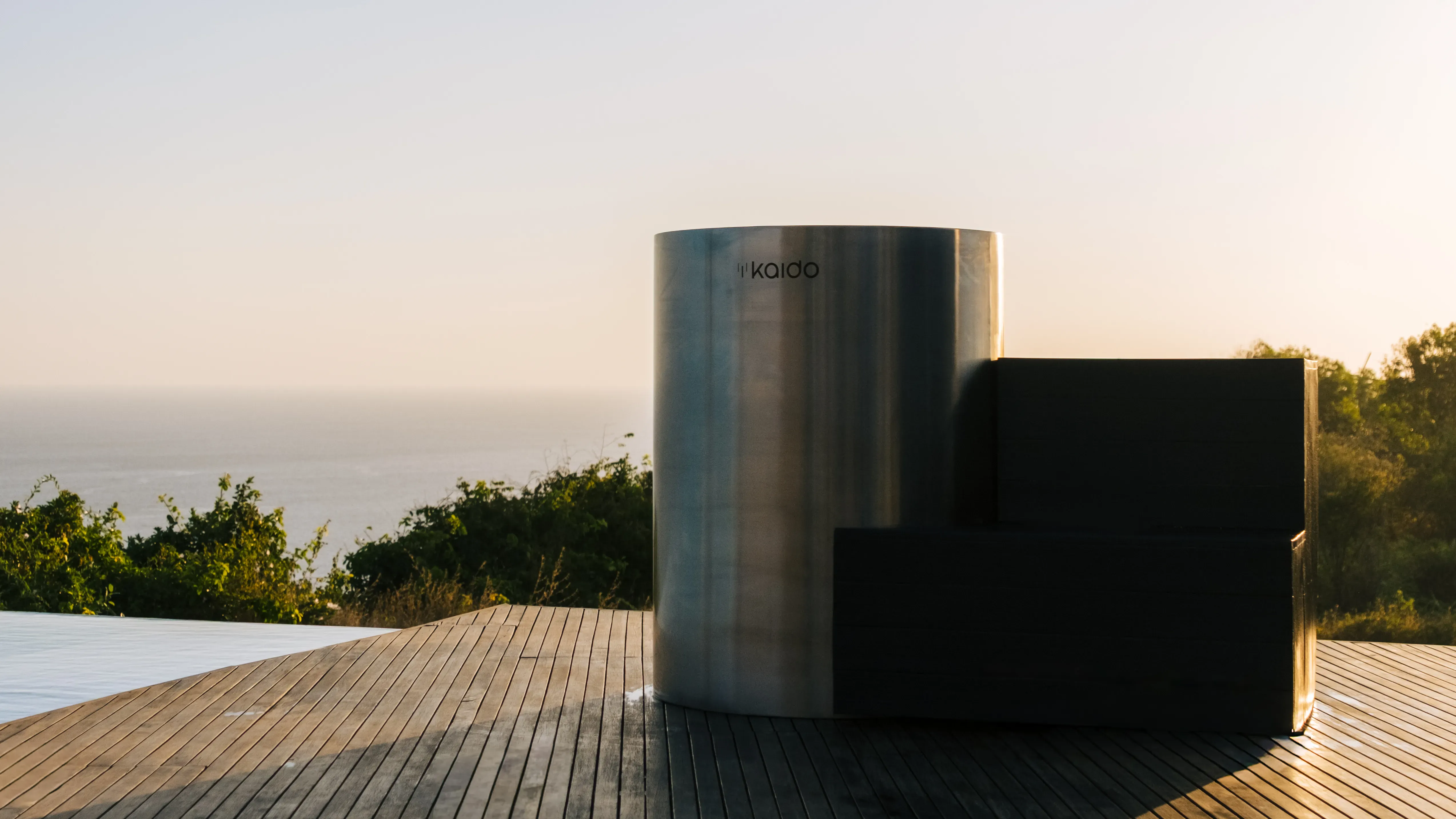
The Phantom and the Oracle hold their water anywhere from 3°C to 40°C, with no ice. Each holds 550 litres.
So you can start warmer than the studies did. Go colder bit by bit. Make it warm when you feel like it.
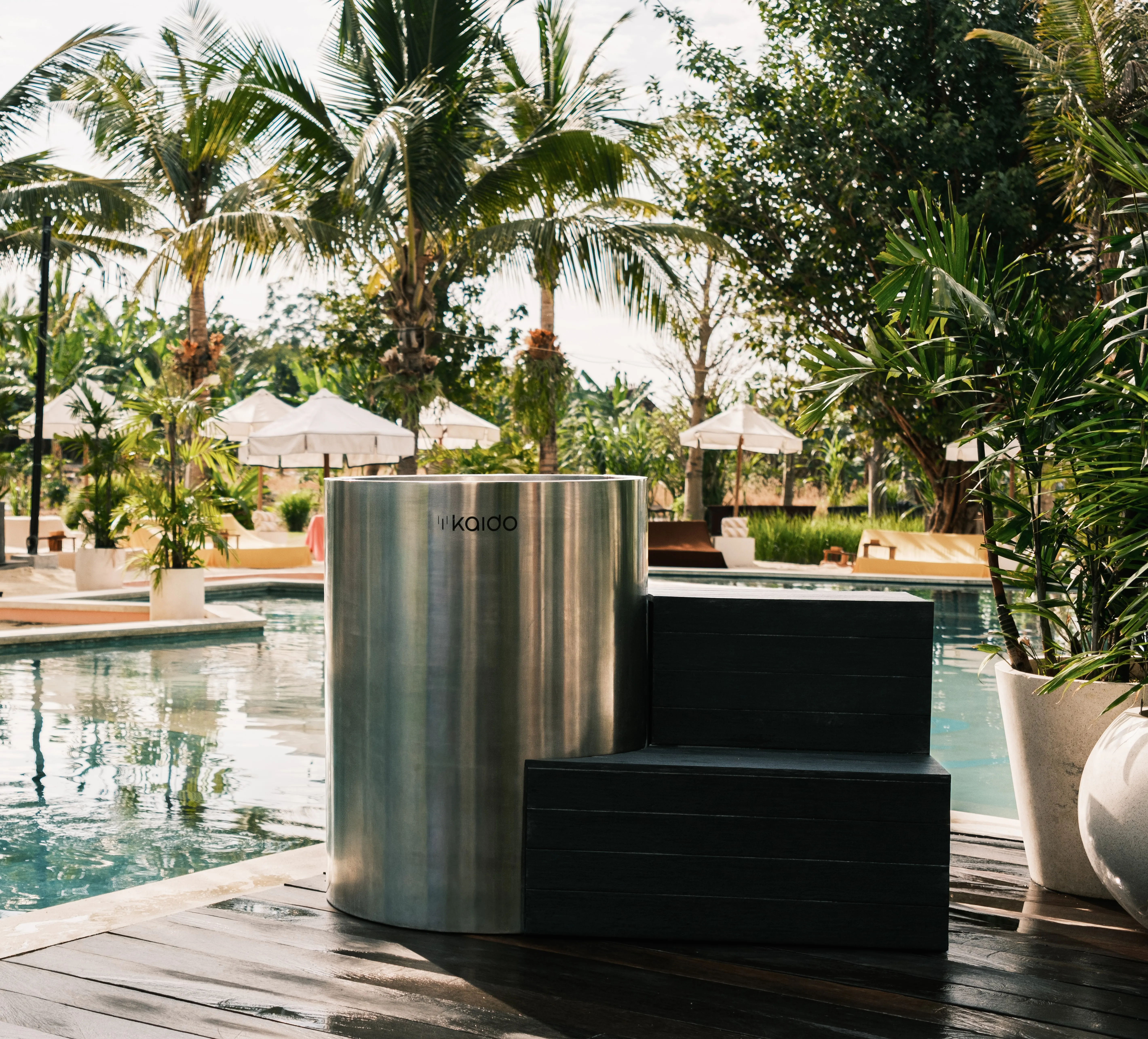
- Stainless steel. The kind used at sea (SS316). Made by hand in Indonesia. A 3-year warranty from the day it goes in.
- Looked after. Ozone and a filter keep the water clean. On our care plan, we change the water and filter every two weeks.
- A step and lid with a story. ECOLLABO8 make them from 75 kg of recycled plastic.
- Hot and cold. Pair it with a sauna in the Hot & Cold set. Read what sauna wood has to do.
Want to see one? Look at our installs. Compare the models in the price guide. You can also book a call to talk it through.
Before you get in
Never alone. With a heart condition, high blood pressure or pregnancy, talk to a doctor first.
Start warmer and shorter than you think you need. Get out if you feel unwell.
Have a health condition? The Australian team say to take extra care.