
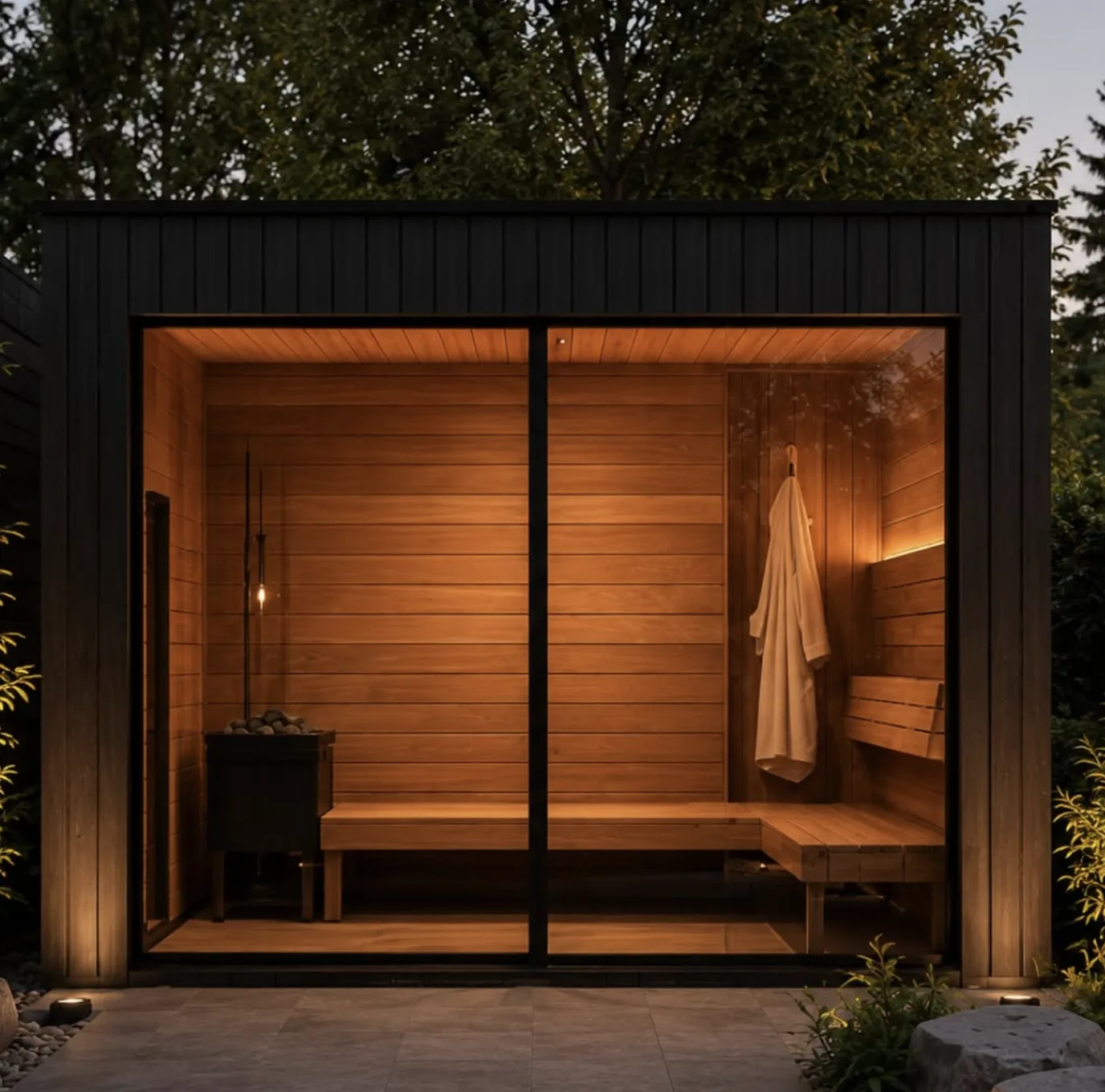
What a sauna’s wood has to do: red cedar, thermo-treated wood and heat

3 min read

Inside, fully natural Canadian red cedar: lighter, cooler to the touch, better at keeping the heat in, and rated to last two to three times as long as sungkai. Outside, mahogany, heat-treated in a vacuum kiln for the weather.

A sauna is heated to 80–90°C and cooled again every session, in Indonesia’s heat and humidity. The wood decides how it feels, how long it lasts and what it costs to run.

180–200°CThe outside mahogany, heat-treated in a vacuum kiln
40% lighterCedar against sungkai, so cooler to the touch
65% betterAt keeping the heat in, for a 40 mm wall
2–3×As long, above ground, as sungkai

Why a partnership

We researched building saunas of our own. It didn’t make sense. Partnering with Sozen, a maker who builds to the standard of our stainless steel ice baths, did.

The vacuum kiln

The only saunas in Indonesia made this way

The outside is mahogany. Sozen heat-treats it at 180–200°C in a vacuum kiln. With no air inside, the wood cannot catch fire, so it takes heat that would burn it in an ordinary kiln. The cedar inside is left fully natural.

Sozen is the only importer of this wood in Indonesia, and the only company here with the machine for this process.

Vacuum kiln · Kaido with Sozen

180–200°C

In a vacuum, so the wood cannot burn. Treated evenly, right through the board.

Ordinary kiln · most makers

Hot air

Air in the kiln, so the wood can catch fire at that heat. Treated from the outside in.

Inside: natural Canadian red cedar
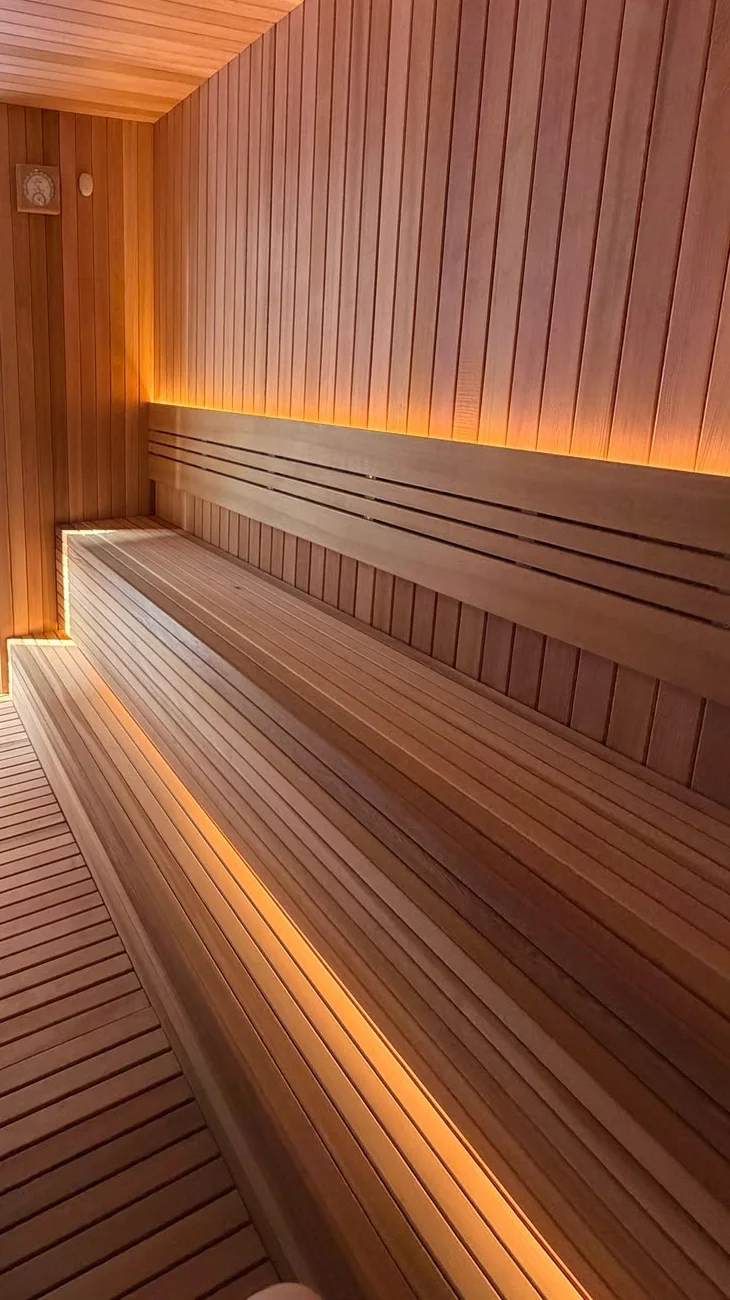
Inside a finished sauna: clear cedar walls, ceiling and benches, lit under the benches
Clear-grade western red cedar: the top grade, with no knots to run hot or leak resin.

Untreated, and it smells like it

The cedar inside is left fully natural. Its own oils resist rot and termites, so it needs nothing on it, and the room keeps the scent of real cedar. It barely moves, too: about 1.2% and 2.6% shrinkage from green to 12% moisture.

Clear grade: no knots

Clear is the top grade of red cedar, and it costs on average twice as much as knotty cedar.

The grade

What red cedar costs, a square foot

Clear$8–12 · no knots · in a Kaido sauna
Knotty$4–6 · knots that run hot and can leak resin

On average twice the price

Tahoe Sauna Company, Western red cedar for saunas, June 2026

Cedar against sungkai

Sungkai is what many saunas in Indonesia use inside.

Weight

A cubic metre, dried

Lighter is better: cooler to touch

Red cedar380 kg
SungkaiAbout 640 kg

About 40% lighter

Queensland Government; Forests, 2023

Insulation

How well a 40 mm wall keeps the heat in

Higher is better: costs less to run

Red cedarAbout 0.41 m²·K/W
SungkaiAbout 0.25 m²·K/W

About 65% better

Worked out from the USDA Wood Handbook, 2021: 40 mm divided by how well each wood conducts heat at 12% moisture

Durability

Rated life above ground

Longer is better

Red cedar15–40 years · class 2
Sungkai7–15 years · class 3

2–3× as long

Queensland Government, durability above ground; Forests, 2023

Outside: thermo-mahogany

A harder-wearing wood, heat-treated

The outside is not cedar. It takes the rain and the sun, so it is clear-grade mahogany (meranti), heat-treated at 180–200°C in a vacuum kiln, with no chemicals. It comes in two finishes: scorched black, or darkened to a deep brown.

Outside

Heat-treated against untreated wood (untreated = 100)

Lower is better

Moisture heldAbout 50 at 220°C: half
Heat through75–80: 20–25% less

Holds less water, so it swells, shrinks and rots less

International ThermoWood Association, ThermoWood handbook, April 2021

What it means to run one

  • Heats sooner: about 15 kg of cedar in each square metre of wall, against 26 kg of sungkai.
  • Costs less to run: the walls keep more heat in, so the heater works less.
  • Lasts longer: rated 15–40 years above ground, against 7–15 for sungkai.

Before you go in

Never alone. With a heart condition, high blood pressure or pregnancy, talk to a doctor first.

To ask about a sauna, or a sauna with a Kaido ice bath, send us an enquiry.

Thinking about an ice bath for your home, villa or studio? See the Phantom and the Oracle, or send us an enquiry.

SOURCES

The weights, durability classes and lives are from the Queensland Government and the 2023 paper in Forests; the insulation is worked out from the Wood Handbook’s formula; the heat treatment of the mahogany outside from the ThermoWood handbook. The grade, the vacuum kiln, the mahogany and the 40 mm walls of Kaido’s saunas are from Sozen, our sauna partner. Checked on 30 October 2026.

  1. Queensland Government

    business.qld.gov.au (opens in a new tab)
    Details

    Properties of timbers: western red cedar. 380 kg/m³ at 12% moisture. Durability class 2 above ground, 15 to 40 years; termite resistant.

  2. Queensland Government, Queensland timbers

    qtimber.daf.qld.gov.au (opens in a new tab)
    Details

    Durability above-ground. Above-ground life by natural durability class: class 1 over 40 years, class 2 15 to 40, class 3 7 to 15, class 4 0 to 7.

  3. Forests (MDPI)

    mdpi.com (opens in a new tab)
    Details

    Bahtiar and Iswanto, Annual tree-ring curve-fitting for graphing the growth curve and determining the increment and cutting cycle period of sungkai (Peronema canescens), 15 August 2023. Sungkai: air-dry density 0.64 g/cm³ (640 kg/m³), natural durability class 3, moderately durable.

  4. USDA Forest Products Laboratory

    research.fs.usda.gov (opens in a new tab)
    Details

    Wood handbook: wood as an engineering material, FPL-GTR-282, 2021. Thermal conductivity of wood from its specific gravity and moisture. At 12% moisture: about 0.096 W/m·K for red cedar (0.32) and 0.16 for sungkai (0.58). Over 40 mm: about 2.4 and 4.0 W per m² per °C.

  5. Tahoe Sauna Company

    tahoesaunacompany.com (opens in a new tab)
    Details

    Western red cedar for saunas: grades, pricing and installation, 2 June 2026. Clear: no knots, no defects, the premium grade, $8 to $12 a square foot. Knotty: visible knots, $4 to $6.

  6. Western Red Cedar Lumber Association

    realcedar.com (opens in a new tab)
    Details

    Characteristics and properties of western red cedar. A very low shrinkage factor: 1.2% radial and 2.6% tangential, green to 12% moisture. Ahead of other softwoods in resisting warping, twisting and checking; low density and air-filled cells make it a good insulator.

  7. International ThermoWood Association

    asiakas.kotisivukone.com (opens in a new tab)
    Details

    ThermoWood handbook, April 2021. Three phases: high-temperature drying, the heat treatment under steam, then cooling and conditioning to 4 to 7% moisture. About half the moisture held at 220°C, 20–25% less heat through, less swelling and shrinkage, and better durability, as the hemicelluloses that fungi feed on break down.